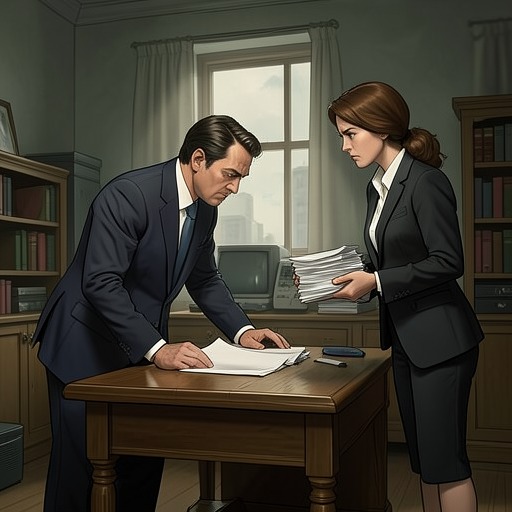
Robert Lindberg
The Girl with the Dragon TattooRobert Lindberg is a Stockholm banker and former school friend of Mikael Blomkvist whose accidental reunion at Arholma redirects Blomkvist’s attention toward Hans-Erik Wennerström. Lindberg’s brief appearance has disproportionate narrative importance: a casual meeting between old classmates opens the path from Blomkvist’s public humiliation to the buried financial history behind the Wennerström affair.
Identity and Reintroduction
Lindberg and Blomkvist had been friends, even very close friends, at Kungsholmen school in the 1970s. Like many school friendships, theirs weakened after they chose separate careers; they had met only about half a dozen times in the following twenty years, and their last meeting had been seven or eight years earlier. When they recognise one another at the visitors’ wharf on Arholma, the familiarity is immediate, and both greet the encounter with pleasure.
The reunion is staged through a practical piece of seamanship rather than a formal social meeting. Lindberg arrives alone in a yellow M-30, using only its mainsail because the engine has failed. Blomkvist helps catch the boat’s painter as it glides into the last available space beside his Scampi. Their joking exchange about Lindberg’s disabled engine establishes an old ease between them before the conversation acquires investigative weight.
Lindberg is described as tanned, with tangled hair and a two-week-old beard. The detail places him in the informal holiday world of Arholma, far from the offices and courtrooms associated with Blomkvist’s professional crisis. Yet his occupation makes him an unusually valuable contact: he studied at the Stockholm School of Economics and entered banking, while Blomkvist studied journalism and devoted much of his career to exposing corruption in banking and business.
The Arholma Conversation
After a day marked by Midsummer festivities, mosquitoes, herring, and aquavit, Lindberg and Blomkvist continue their conversation in the cabin of the M-30. Their talk begins as friendly banter about corporate ethics, including the moral status of golden-parachute agreements from the 1990s. Lindberg eventually concedes that the business world contains immoral figures, and his suddenly serious look signals the change from general argument to a specific disclosure.
Lindberg asks why Blomkvist does not write about Hans-Erik Wennerström. Blomkvist replies that he does not know of anything to write about, a response that reveals how little he presently understands about the financier whose libel case has just ended in court. Lindberg’s question therefore functions not as a finished accusation but as a provocation: it gives Blomkvist a reason to reconsider whether the public version of Wennerström’s success is complete.
Lindberg knows that in 1992 Wennerström approached the Agency for Industrial Assistance seeking funding. Wennerström presented a plan, apparently supported by interests in Poland, for establishing a food-packaging industry. According to Lindberg, Wennerström left with sixty million kronor. The scale of the sum and the vagueness surrounding the supposed Polish backing transform an abstract suspicion about corporate morality into a concrete financial lead.
Position in the Wennerström Investigation
The information Lindberg provides becomes the starting point for Blomkvist’s renewed inquiry. Blomkvist later explains that Lindberg was not lying: every word he had told Blomkvist could be verified in documents from the audit at SIB. Blomkvist also travelled to Poland, photographed the sheet-metal shack where the supposedly large Minos Company was housed, and interviewed former employees who gave consistent accounts. Lindberg’s role is consequently that of a reliable initiating source rather than a deceiver whose story collapses under scrutiny.
The early lead eventually develops into a much larger investigation. Blomkvist recalls that the first published story about the Minos affair was followed by harassment at Millennium that seemed wildly disproportionate to the article’s contents. The investigation then located a Deep Throat in Wennerström’s circle. That source, frightened enough to insist on meetings in hotel rooms, alleged that money from the Minos affair had been used in weapons deals during the war in Yugoslavia and that Wennerström had dealt with the right-wing Ustashe in Croatia. Documents supplied by the source supported those allegations.
Lindberg is not presented as the Deep Throat and is not shown participating in the later investigation. His importance lies earlier, at the point where a private conversation gives Blomkvist the first direction toward the Minos affair. The distinction matters: Lindberg offers information connected to banking records and institutional funding, while the later source exposes the more dangerous political and criminal implications of Wennerström’s operations.
Relation to Blomkvist’s Crisis
When Lindberg speaks to Blomkvist, the court has just ruled that Blomkvist libelled and defamed Hans-Erik Wennerström. The trial is over, Blomkvist has no plans to appeal, and he avoids repeating his allegation on the courthouse steps because he does not want to test the consequences of doing so. Publicly, he accepts that the judicial process has taken its course; privately, the encounter with Lindberg reopens the question of whether his defeated story contained a truth that had not yet been properly established.
This tension also clarifies why Lindberg’s apparently casual question matters. Blomkvist’s professional identity rests on careful documentation, yet the court’s decision has made him appear to have published an unsupported accusation. Dirch Frode later reasons that Blomkvist probably believed his story but that something had gone wrong: perhaps a trusted source had been deceived, perhaps false information had been deliberately supplied, or perhaps Blomkvist had faced a threat serious enough to make surrender preferable to resistance. Lindberg’s verifiable account offers a third possibility to the public scandal’s apparent alternatives: Blomkvist’s investigation may have been based on real material even though the legal outcome discredited him.
Narrative Function
Lindberg is a compact but structurally decisive character. His friendship with Blomkvist provides the social accident that launches the inquiry, while his banking career gives the conversation access to information unavailable within Blomkvist’s immediate journalistic circle. The contrast between the two men’s professions also turns their reunion into a miniature debate about the boundaries between ethical criticism and institutional complicity.
His contribution illustrates how the novel’s investigation advances through ordinary relationships as much as through formal research. A shared past, a disabled engine, an improvised berth, and an evening of drinking create the circumstances in which politically consequential information can be spoken. Lindberg disappears from the centre of the story after giving the lead, but the Minos trail he opens continues through documents, fieldwork in Poland, threatened sources, and the eventual accumulation of evidence against Wennerström.